Bitcoin’s Shocking 30% Crash: What Happened?
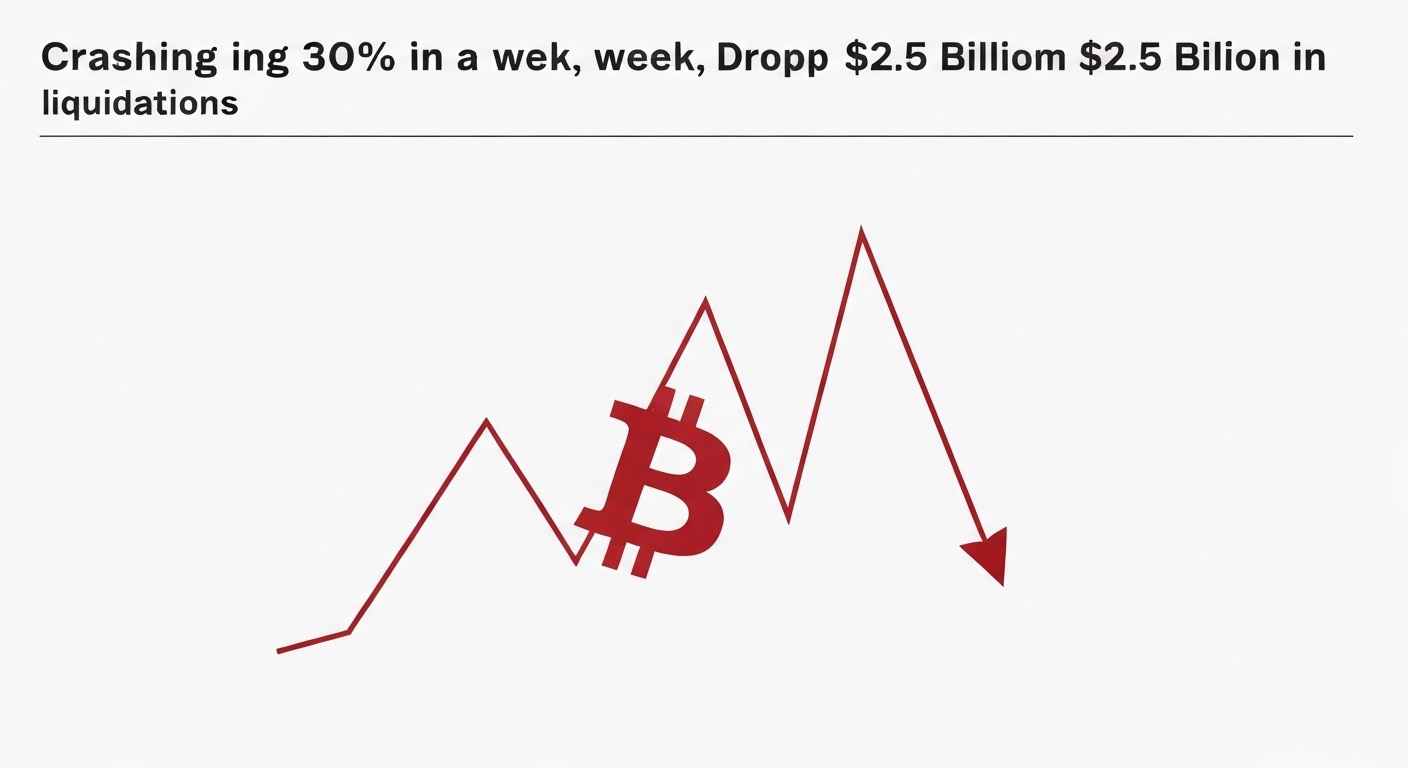
In a stunning turn of events, Bitcoin (BTC), the world’s leading cryptocurrency, has crashed by 30% in the span of just one week as of February 5, 2026. The price of Bitcoin dropped below the critical $61,000 mark, marking its worst drawdown since the infamous FTX collapse in November 2022. This dramatic decline has sent shockwaves through the crypto market, resulting in over $2.5 billion in liquidations across exchanges and leaving investors scrambling for answers.
The crypto market, often characterized by its volatility, has once again reminded participants of its high-risk nature. But what exactly triggered this massive sell-off, and what does it mean for the future of Bitcoin and the broader cryptocurrency ecosystem? Let’s dive into the details of this historic crash and explore the factors at play.
The Numbers Behind the Bitcoin Crash
Bitcoin’s price began the week hovering around $87,000, a level that many analysts believed signaled a strong bullish trend following months of steady gains. However, by February 5, 2026, the price had nosedived to below $61,000 - a staggering loss of over $26,000 per BTC in just seven days. According to data from CoinGecko, this 30% drop represents the steepest weekly decline since the FTX debacle, which saw Bitcoin lose nearly 25% of its value in a similar timeframe.
The crash wasn’t limited to Bitcoin alone. Major altcoins like Ethereum (ETH), Binance Coin (BNB), and Solana (SOL) also suffered double-digit losses, with ETH dropping 22% and SOL plummeting by 28%. The total cryptocurrency market cap shrank by over $800 billion, a clear indicator of the widespread panic among investors.
Perhaps the most alarming statistic is the $2.5 billion in liquidations reported by Coinalyze. Leveraged positions, particularly long positions betting on Bitcoin’s continued rise, were wiped out as prices fell below key support levels. This mass liquidation event has further exacerbated the downward pressure on prices, creating a vicious cycle of selling.
What Triggered the Bitcoin Sell-Off?
While the crypto market is no stranger to sudden price swings, several key factors appear to have contributed to this unprecedented crash. Here’s a breakdown of the primary catalysts:
- Macroeconomic Uncertainty: Rising interest rates and persistent inflation concerns have spooked traditional and crypto investors alike. With central banks signaling tighter monetary policies in 2026, risk assets like Bitcoin are losing their appeal as safe havens.
- Regulatory Crackdowns: Reports of impending regulatory actions in major markets, including the United States and the European Union, have fueled fears of stricter oversight. A leaked document suggesting a potential ban on leveraged crypto trading in the EU sent shockwaves through the community.
- Whale Selling: On-chain data from Glassnode indicates that several large Bitcoin holders, or “whales,” offloaded significant portions of their holdings in the days leading up to the crash. This mass selling by institutional players likely triggered panic among retail investors.
- Technical Breakdown: Bitcoin’s failure to hold above the $80,000 psychological level acted as a bearish signal for technical traders. As stop-loss orders were triggered, the cascading effect pushed prices even lower.
“This crash is a perfect storm of macroeconomic headwinds and market-specific fears,” said Sarah Thompson, a senior analyst at CryptoInsights. “Investors are grappling with uncertainty on multiple fronts, and Bitcoin, as the market leader, is bearing the brunt of the sell-off.”
The Ripple Effect: $2.5 Billion in Liquidations
The sheer scale of liquidations during this crash is staggering. Over $2.5 billion in leveraged positions were liquidated across major exchanges like Binance, Coinbase, and Kraken, with Bitcoin accounting for nearly 60% of the total. Leveraged trading, while offering the potential for outsized gains, often amplifies losses during downturns, and this event was no exception.
Retail investors, many of whom entered the market during the 2025 bull run, have been hit hardest. Social media platforms like X are flooded with stories of traders losing life savings in a matter of hours. One user posted, “I had $50,000 in a 10x long on BTC. It’s all gone now. I don’t know what to do.”
Analysts warn that such high levels of liquidations can create a feedback loop, where forced selling drives prices lower, triggering even more liquidations. “We’re seeing a classic deleveraging event,” explained Mark Daniels, a derivatives expert at BlockchainMetrics. “Until the market stabilizes, we could see further downside.”
Comparisons to the FTX Collapse
The current Bitcoin crash has drawn inevitable comparisons to the FTX collapse of November 2022, which remains one of the darkest chapters in crypto history. During that period, the failure of the FTX exchange led to a loss of trust in centralized platforms and a rapid sell-off of digital assets. Bitcoin’s price fell from around $21,000 to below $16,000 in a matter of days.
While the triggers for the current crash differ, the scale of the drawdown and the psychological impact on investors are eerily similar. “The FTX collapse was about trust in institutions; this crash is about trust in the market itself,” noted Thompson. “Both events remind us how fragile sentiment can be in crypto.”
What’s Next for Bitcoin and the Crypto Market?
Short-Term Outlook
In the immediate aftermath of the crash, analysts are divided on where Bitcoin’s price might head next. Some believe that $60,000 could act as a key support level, potentially halting the decline if buying pressure returns. Others warn that a break below this threshold could see BTC test $50,000 or lower.
“We’re in uncharted territory,” said Daniels. “If macroeconomic conditions worsen or if more whales exit their positions, we could see further pain. On the flip side, a coordinated effort by institutional buyers could spark a recovery.”
Long-Term Implications
Despite the current turmoil, many industry leaders remain optimistic about Bitcoin’s long-term prospects. The cryptocurrency has weathered numerous crashes in its 17-year history, often emerging stronger after each cycle. Proponents argue that Bitcoin’s decentralized nature and growing adoption as a store of value will ensure its resilience.
However, the crash has reignited debates about the sustainability of leveraged trading and the need for clearer regulations. Calls for investor protection measures are growing louder, with some suggesting that exchanges should impose stricter limits on leverage to prevent such catastrophic liquidations.
How Investors Can Navigate the Volatility
For those caught in the storm, the path forward can seem daunting. Here are a few strategies to consider during turbulent times:
- Stay Informed: Keep up with market news and macroeconomic developments that could impact crypto prices. Platforms like CoinDesk and CoinTelegraph offer real-time updates.
- Avoid Panic Selling: Emotional decisions often lead to locking in losses. Assess your portfolio with a clear head before making moves.
- Diversify: If you’re heavily exposed to crypto, consider diversifying into other asset classes to mitigate risk.
- Use Stop-Loss Orders: Protect your investments by setting stop-loss orders to limit potential losses during sudden drops.
Ultimately, the crypto market remains a high-risk, high-reward space. Investors should only allocate what they can afford to lose and approach the market with caution.
Conclusion: A Test for Crypto’s Resilience
Bitcoin’s 30% crash below $61,000 is a stark reminder of the volatility inherent in the cryptocurrency market. With $2.5 billion in liquidations and widespread panic, the industry faces one of its toughest tests since the FTX collapse. Yet, history has shown that crypto often rebounds from such setbacks, driven by innovation and a passionate community.
As we move forward, the lessons from this crash will likely shape the future of Bitcoin and digital assets. Will this be a turning point for stricter regulations, or will it reinforce the narrative of crypto as an unstoppable force? Only time will tell, but for now, investors must brace for continued uncertainty.
What are your thoughts on Bitcoin’s crash? Have you been affected by the recent liquidations? Share your experiences in the comments below, and don’t forget to subscribe to CryptoCoinAtlas for the latest updates on the crypto market!