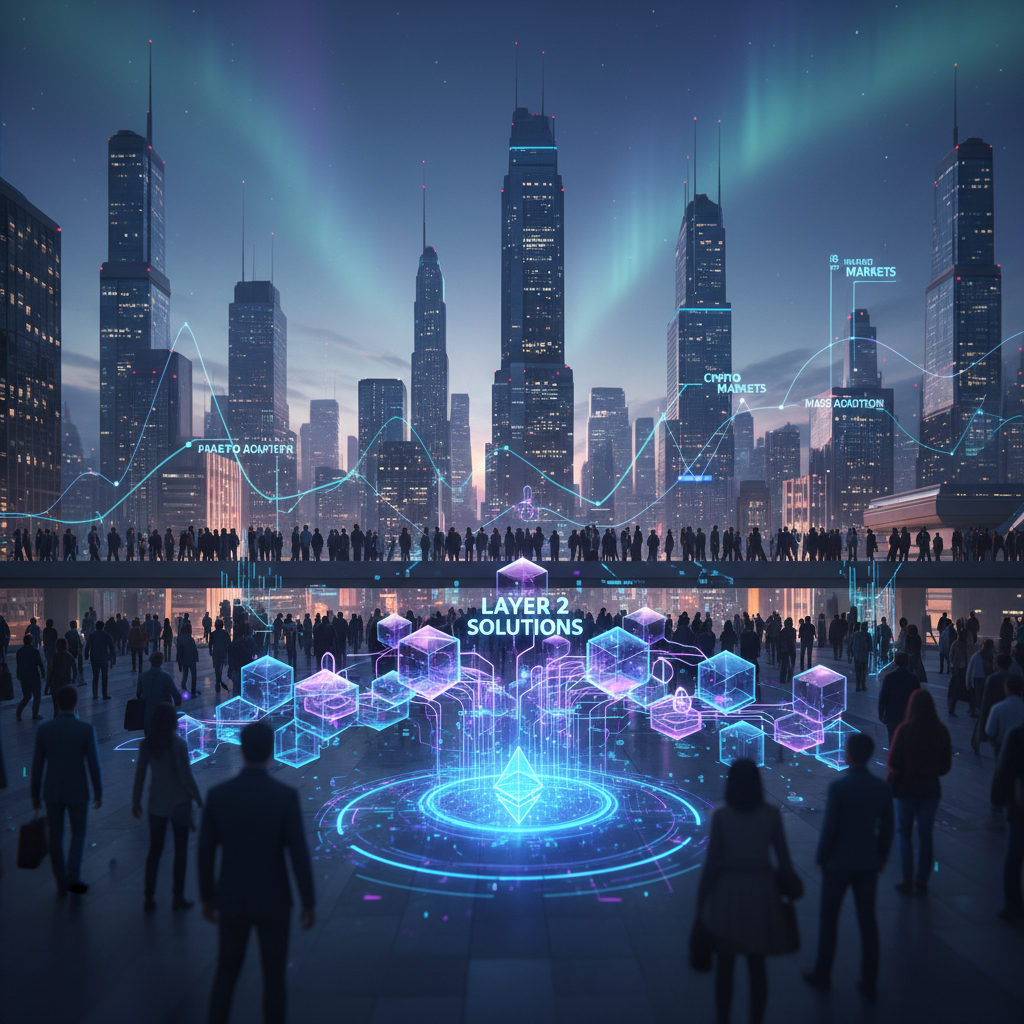
As the cryptocurrency landscape continues to evolve, Ethereum remains a cornerstone of innovation in the blockchain space. In 2026, one of the most significant developments driving Ethereum’s growth—and by extension, the broader crypto markets—is the rapid advancement of Layer 2 (L2) solutions. These scaling technologies are addressing long-standing challenges like high gas fees and network congestion, paving the way for mass adoption of decentralized applications (dApps) and DeFi platforms. Let’s dive into the latest updates on Ethereum’s Layer 2 ecosystem and explore how these innovations are shaping the future of crypto.
What Are Ethereum Layer 2 Solutions and Why Do They Matter?
For those new to the crypto space, Ethereum’s Layer 2 solutions are protocols built on top of the Ethereum blockchain (Layer 1) to improve scalability and efficiency. The primary goal of L2 solutions is to process transactions off-chain while still leveraging Ethereum’s robust security and decentralization. This approach significantly reduces transaction costs (known as gas fees) and speeds up processing times—two critical barriers to mainstream adoption of blockchain technology.
In 2026, with the crypto market maturing and user demand for dApps soaring, L2 solutions like Optimism, Arbitrum, and zkSync have become household names among Ethereum enthusiasts. These platforms are not just technical upgrades; they are catalysts for broader blockchain accessibility, enabling everything from NFT marketplaces to decentralized finance protocols to operate at scale.
Key Layer 2 Players Driving Ethereum’s Growth in 2026
The Layer 2 ecosystem is bustling with activity this year, and several projects stand out for their impact on Ethereum and the crypto market. Here are the frontrunners:
- Optimism: Known for its optimistic rollup technology, Optimism continues to dominate L2 transaction volume in 2026. With recent upgrades to its governance model and developer tools, Optimism is attracting a wave of new dApps, from gaming platforms to yield farming protocols.
- Arbitrum: Arbitrum’s focus on low-cost, high-throughput transactions has made it a go-to solution for DeFi projects. Its latest integrations with cross-chain bridges in 2026 are enhancing interoperability, a key trend in the crypto space.
- zkSync: Leveraging zero-knowledge rollups, zkSync offers unparalleled privacy and scalability. In 2026, zkSync Era, its flagship product, has seen massive adoption among privacy-focused crypto users and enterprises looking to build on Ethereum.
These platforms are not just competing; they are collectively strengthening Ethereum’s position as the leading smart contract blockchain, even as competitors like Solana and Binance Smart Chain vie for market share.
How Layer 2 Solutions Impact Crypto Markets
The rise of Layer 2 solutions is having a ripple effect across crypto markets. First and foremost, the reduction in Ethereum gas fees—often a deterrent for small-scale investors—has democratized access to DeFi and NFT platforms. In 2026, users can stake, swap, or mint assets without worrying about prohibitive costs, driving higher transaction volumes and liquidity in the market.
Moreover, the scalability of L2 solutions is attracting institutional interest. Major financial players are now more willing to experiment with Ethereum-based solutions for tokenized assets and cross-border payments, knowing that the network can handle enterprise-level demand. This trend is reflected in Ethereum’s price stability and growing market cap, even amidst the volatile nature of crypto markets in 2026.
Layer 2 advancements also bolster Bitcoin indirectly. As Ethereum solidifies its role as the backbone of decentralized finance, Bitcoin’s narrative as a store of value strengthens. Cross-chain solutions built on L2 platforms are enabling seamless interactions between Bitcoin and Ethereum ecosystems, further integrating the two largest cryptocurrencies in the market.
Challenges and Future Outlook for Layer 2 in 2026
Despite their transformative potential, Layer 2 solutions face challenges that could impact their trajectory in the crypto space. One major concern is user education—while L2 platforms are user-friendly compared to a few years ago, bridging assets from Layer 1 to Layer 2 can still be daunting for newcomers. Additionally, the fragmented nature of the L2 ecosystem means that liquidity is often split across multiple platforms, creating inefficiencies for traders and developers.
Security is another critical issue. While L2 solutions inherit Ethereum’s security to some extent, they are still relatively new, and vulnerabilities in smart contracts or rollup mechanisms could lead to exploits. Crypto market participants are keenly watching how these platforms respond to potential threats in 2026.
Looking ahead, the future of Layer 2 solutions appears bright. Developers are already working on “Layer 3” concepts—essentially, scaling solutions built on top of L2 platforms—to further enhance performance. Additionally, Ethereum’s core team is exploring ways to integrate L2 advancements directly into the mainnet through upcoming upgrades, potentially blurring the lines between Layer 1 and Layer 2 over the next few years.
Why Ethereum’s Layer 2 Ecosystem Matters to Crypto Investors
For crypto investors, keeping an eye on Layer 2 developments is crucial. The success of these scaling solutions directly impacts Ethereum’s value proposition and, by extension, the performance of ETH as an asset in the crypto market. Furthermore, many L2 platforms have their own native tokens—such as OP for Optimism and ARB for Arbitrum—that present unique investment opportunities. These tokens often experience price surges tied to adoption metrics, making them attractive for speculative traders in 2026.
Beyond individual tokens, the broader implications of L2 scaling are worth considering. As Ethereum becomes more accessible and scalable, it reinforces its dominance in the blockchain space, potentially driving long-term growth in the crypto market. For Bitcoin holders, this could mean increased demand for wrapped Bitcoin (WBTC) on Ethereum, further intertwining the fates of the two leading cryptocurrencies.
In conclusion, Ethereum’s Layer 2 solutions are at the forefront of blockchain innovation in 2026, addressing critical pain points and unlocking new possibilities for the crypto ecosystem. Whether you’re a DeFi enthusiast, an NFT creator, or a long-term investor, the evolution of L2 platforms is a trend you can’t afford to ignore. As these technologies mature, they are not just scaling Ethereum—they are scaling the future of cryptocurrency itself.